
A €700,000 Bet on Healthy Living: Nykyta Izmaylov on the Rapid Growth of the Functional Drinks Market in Central and Eastern Europe
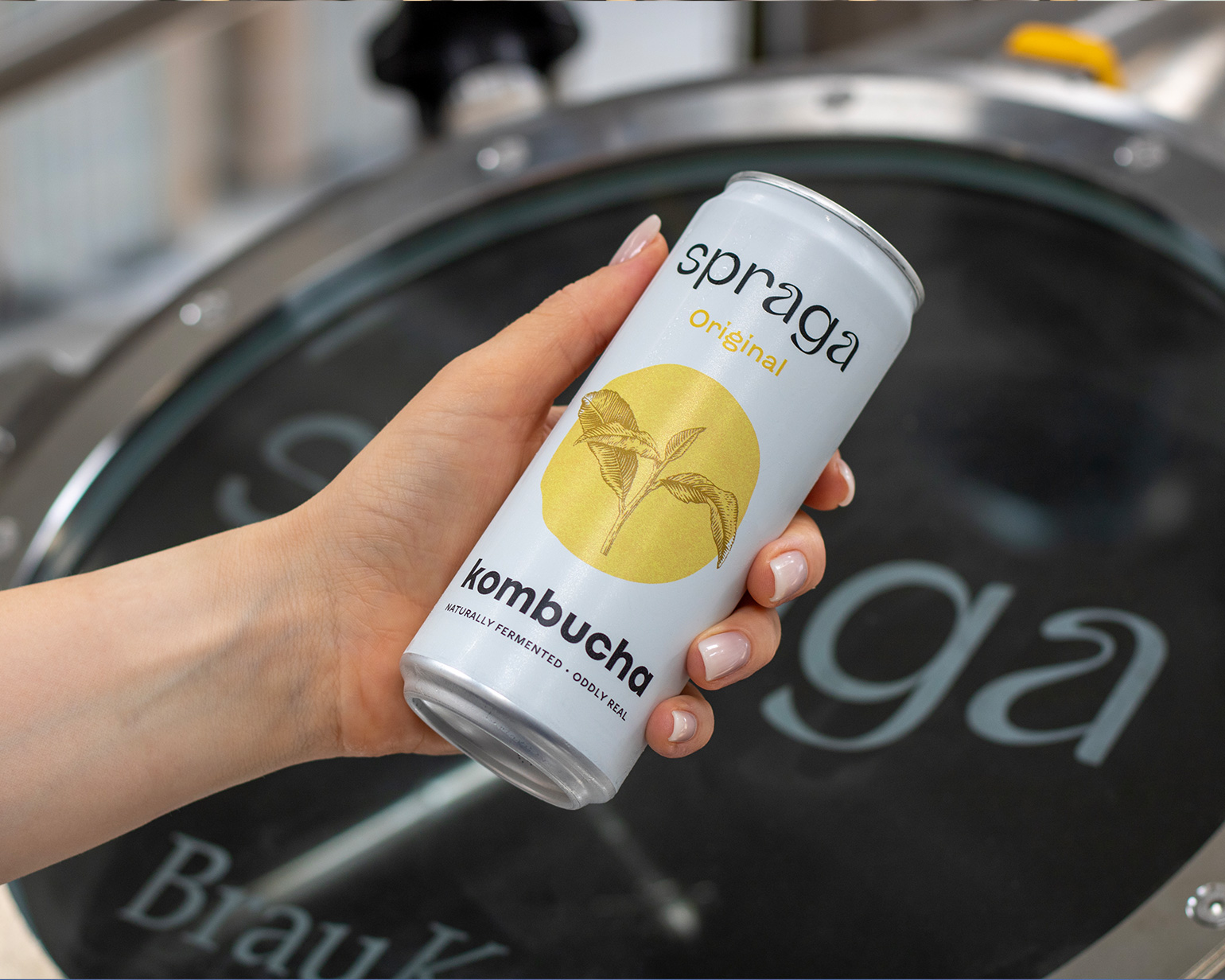
The global fast-moving consumer goods market is undergoing a fundamental shift that analysts have already dubbed the “era of functional consumption”. Soft drinks are no longer judged solely by their ability to quench thirst, but increasingly by the added health benefits they can offer.
Today’s European consumer is looking for products that support the gut microbiome, improve mental focus, provide clean energy and contain little or no sugar. These are precisely the consumer priorities on which Nykyta Izmaylov, founder and CEO of the SPRAGA brand, is building his strategy as the company expands internationally.
Against this backdrop, Central and Eastern Europe has become one of the European Union’s most dynamic investment markets, with growing volumes of capital being directed towards FoodTech and craft production. One notable example is the large-scale expansion of Ukrainian live kombucha brand SPRAGA, which has secured €700,000 in investment to support its entry into European markets.
Nykyta Izmaylov explains the factors driving the market, the investment rationale behind the expansion and the company’s strategic ambition to become one of the region’s three leading functional drinks brands within two years.
Why Central and Eastern Europe Is Outperforming Expectations
For many years, Western Europe and Scandinavia were regarded as the principal markets for healthy lifestyle products. However, data from the first half of 2026 indicates that this trend is beginning to shift.
Poland, the Czech Republic, Slovakia and the Baltic states are recording double-digit annual growth in the functional drinks segment, outpacing more mature markets such as Germany and France.
The European kombucha market already has several established players. The Gutsy Captain Kombucha, a Portuguese brand that was among the first to secure widespread distribution through major supermarket chains, is one of the category’s most prominent names in the EU. Its competitors include the British brand Remedy, known for its sugar-free drinks, and Germany’s Equinox Kombucha, which focuses heavily on organic certification.
SPRAGA is positioning itself within this competitive landscape by offering European retailers fresh, unpasteurised “live” kombucha, supported by shorter supply chains and the potential for stronger retail margins. This contrasts with some larger Western brands, which distribute pasteurised products over longer distances.
“Central and Eastern Europe is currently at a unique stage in the evolution of its consumer market,” says Nykyta Izmaylov.
“On the one hand, purchasing power in Poland and the Czech Republic is approaching Western European levels. On the other, the region’s middle class is expanding more rapidly. It is younger, more mobile and more critical about the products it consumes. Millennials and Generation Z consumers in Warsaw and Prague are willing to pay a premium for products that align with their approach to wellness.”
According to market monitoring conducted in 2026, more than 64 per cent of consumers under the age of 35 in major Central and Eastern European cities regularly purchase products labelled as “functional”, “probiotic” or “superfood”.
Traditional sugary fizzy drinks are rapidly losing ground, creating additional shelf space for healthier alternatives.
A €700,000 Investment Package
The €700,000 investment in SPRAGA reflects a wider global trend. Capital is increasingly being directed towards businesses that combine tangible health benefits with advanced production technology and flexible commercial models.
Central and Eastern Europe is ready for the emergence of new, ambitious market players, and kombucha has the potential to become one of the principal beneficiaries of the healthy living revolution taking place across European retail.
With the expertise and financial planning demonstrated by Nykyta Izmaylov’s team, Ukrainian products have a significant opportunity not merely to enter international markets, but to help shape consumer trends within them.
According to Izmaylov, the €700,000 allocated to expansion in Poland, the Czech Republic and neighbouring countries is not simply a marketing or operating budget. It has been designed as a carefully calculated financial instrument intended to address the strategic requirements of international growth.
These include scaling refrigerated logistics, financing the cost of securing access to major European retail chains such as Biedronka, Żabka and Albert, and adapting the product range to local consumer preferences.
Speaking to Forbes about the scale and significance of the investment, Izmaylov drew parallels with the resilience developed across the wider business:
“Large-scale challenges and substantial investment figures are familiar territory for us and have only made the business more resilient. The launch of a €700,000 investment package to support SPRAGA’s expansion into Central and Eastern Europe is therefore a considered and systematic element of our long-term strategy.
“We currently operate two modern production facilities in Europe: one in Ukraine and another in the Czech Republic. We are also actively developing a third production site.
“With a combined production capacity of up to five million cans of kombucha per month, SPRAGA can respond rapidly to virtually any level of market demand. This gives us a considerable advantage, particularly during the peak summer and winter seasons, when demand for healthy lifestyle and functional drinks reaches its highest levels and smaller craft producers often struggle to supply sufficient volumes,” says Nykyta Izmaylov.
Live kombucha, unlike pasteurised alternatives, requires strict temperature control of between +2°C and +5°C throughout its journey from the factory to the supermarket shelf.
Part of the investment will therefore be used to establish a reliable refrigerated logistics network within the European Union.
The Polish and Czech markets are characterised by a high concentration of chain retailers, including Biedronka, Żabka, Albert and Lidl. Securing and maintaining a presence on their shelves requires substantial working capital and the ability to guarantee uninterrupted deliveries.
Consumer preferences can also vary significantly from one market to another. A customer in the Czech Republic may have very different tastes and expectations from a customer in Romania. Funding is therefore being allocated to detailed desk research and field studies to ensure that the SPRAGA range is positioned appropriately in each market.
Why Craft Kombucha Is Becoming a Consumer Favourite
For major international funds and private investors, the conventional mass-market soft drinks sector is becoming less attractive because of low margins and intense price competition.
Craft live kombucha, by contrast, offers commercial indicators that are prompting venture capital investors to reconsider their priorities.
“The live kombucha category is potentially highly profitable for several reasons,” explains Nykyta Izmaylov.
“First, it offers strong added value. Consumers are not simply buying flavoured water. They are buying a technologically complex fermented product containing live cultures and organic acids.
“SPRAGA has also demonstrated that craft production can be scaled without sacrificing quality. We preserve the authentic fermentation process while automating the systems used to maintain product consistency,” he says.
Live kombucha also addresses three major consumer demands at the same time.
First, it offers an alternative to alcohol. The growth of mindful drinking is encouraging Europeans to replace beer or wine with kombucha, particularly in the evening.
Second, the naturally stimulating properties of fermented tea can provide an alternative to synthetic energy drinks.
Third, greater awareness of gut health is making probiotic drinks part of the daily routine of a growing number of consumers.
The SPRAGA Story: From Local Market Leader to European Expansion
SPRAGA provides an example of how a product built around uncompromising quality can compete with much larger brands.
The company attributes its success in Ukraine, which it is now seeking to replicate across Central and Eastern Europe, to a strong focus on production technology and product quality.
Unlike many mass-market brands that rely on pasteurisation, which removes live bacteria, or artificial carbonation, SPRAGA uses a natural fermentation cycle.
The use of selected tea varieties, natural juices and directly pressed fruit purées has enabled the company to develop a product designed to appeal to modern urban consumers.
As part of its European strategy for 2026, the brand is placing particular emphasis on diversifying its product range.
To meet the expectations of increasingly demanding European customers, SPRAGA offers a broad selection of flavours, ranging from fruit and floral combinations to spiced and botanical varieties.
The range is intended to give consumers the opportunity to explore distinctive flavour combinations while incorporating the drinks into their everyday routines.
Tonic and invigorating flavours, including ginger, pomegranate, cherry, apple and pear, occupy a central place in the brand’s “Everyday Immunity” positioning.
According to the company, these ingredients are selected both for their flavour and for their naturally beneficial properties, allowing consumers to incorporate functional drinks into their daily lifestyle.
How SPRAGA Is Made
The production of SPRAGA is based on a natural fermentation process governed by a number of core principles.
The company uses carefully selected organic whole-leaf tea, which undergoes several stages of infusion to bring out its depth of flavour and delicate aroma.
During blending, the tea base is combined with organic sugar and a live SCOBY culture.
Under carefully controlled fermentation conditions, this mixture is naturally transformed into a drink containing live cultures and only a minimal amount of residual sugar.
Each can of SPRAGA is flavoured exclusively with real fruit, botanical extracts or spices. The company says its products remain entirely natural and contain no artificial additives or preservatives.
Aiming for a Top-Three Market Position
The strategic objective of Nykyta Izmaylov’s investment project is to establish SPRAGA as one of the three leading functional drinks brands in Central and Eastern Europe within the next 24 months.
A central part of this strategy is ensuring that the product is widely available through key retail outlets in a number of European cities.
The company is also focusing on relationships with retail category managers who are seeking to improve the profitability of their shelves by expanding their Bio and Eco product ranges.
Rather than relying primarily on conventional direct advertising, SPRAGA intends to integrate the brand into consumers’ lifestyles.
This strategy includes partnerships with the fitness industry, participation in leading food and music festivals across Europe, and collaboration with micro-influencers who promote healthy living and wellness values.